

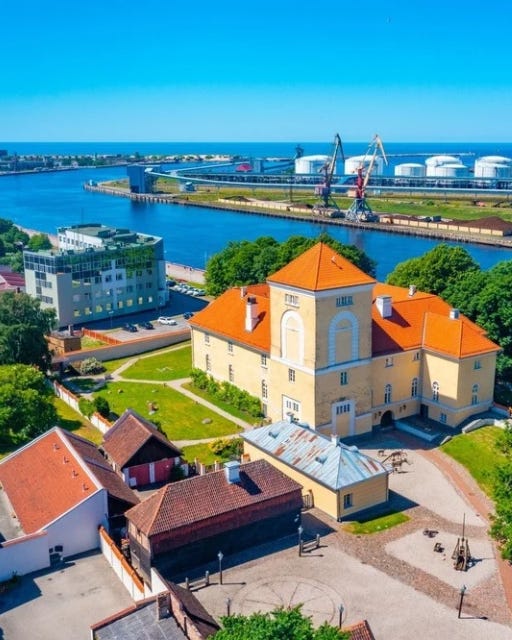
The Baltic states — Estonia, Latvia, and Lithuania — sit along the eastern shore of the Baltic Sea, between Scandinavia to the north and Poland to the south. They are small countries, and you can drive the length of all three in a single long day. But that would miss the point. These are places shaped by centuries of trade, occupation, and quiet endurance, where medieval merchant towns, forested coastlines, and deep religious traditions sit close together. For travellers who care about history and culture, the region offers a great deal in a compact space.
What makes the Baltics different is how well the old centres have survived. Tallinn, Riga, and Vilnius each have a historic core recognised by UNESCO, and all three are among the best preserved in northern Europe. The towns were built by Hanseatic merchants, German landowners, and local craftsmen, and later lived through Russian, Swedish, and Soviet rule. That mixed past is still visible in the architecture, the churches, and the languages you hear in the streets. Prices remain lower than in western Europe, and the distances between highlights are short.
This route suits travellers who prefer depth over speed. You will not be rushing between famous sights. Instead you will spend real time in three capital cities, with a national park and a remarkable rural shrine along the way. It works well for anyone interested in history, architecture, and slow walking, and the flat, well-signed roads make it an easy self-drive trip.
In this Email:
The Baltic capitals route: Tallinn to Vilnius - Let’s take you from north to south, following the natural line of the coast and the main road that links the three capitals. You will get a clear sense of each place, what to see and do, and how to fit it all into a relaxed route.
Tallinn Old Town, Estonia
Lahemaa National Park, Estonia
Riga Old Town and the Art Nouveau district, Latvia
The Hill of Crosses, Lithuania
Vilnius Old Town, Lithuania
Suggested five-day itinerary
When to visit and how to get there
